 |
Music with Ease > 19th Century French Opera > Life of Meyerbeer
The Life of Jakob Meyerbeer
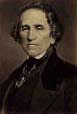
Jakob Meyerbeer, like Mendelssohn, the son of a Jewish banker, was born in Berlin in 1791. The family name was Beer, but a friend called Meyer left the composer a fortune on condition that he adopted his name; so the vulgar "Beer" was converted into the more euphonious Meyerbeer. Mendelssohn’s master, Zelter, the friend of Goethe, gave him some lessons, and later, as already indicated, he was taken in hand by the Abbé Vogler. It was as a pianist that he gained his first distinctions; but he took to opera and achieved one or two triumphs in Italy in direct rivalry with Rossini. Weber was disgusted with his friend’s concession to the prevailing taste. "It makes my heart bleed," he said, "to see a German composer of creative power stoop to become a mere imitator in order to curry favour with the crowd." Meyerbeer declared that he could not help himself. Living in Italy, he was "involuntarily drawn into the delicious maze of tones and bewitched in a magic garden from which I could not escape." By-and-by he found no difficulty in escaping and creating a magic garden for himself.
In 1827 he married his cousin Mina Mosson. Then he settled in Paris, where he formed friendly relations with Cherubini, Auber, Halévy, Boieldieu, and others. He was fabulously rich (for a composer), but he lived like a miser, and worked as hard as if he depended entirely on his compositions. His mother used to say apologetically that he was "not obliged to compose." He wrote himself: "I am above all an artist, and it gives me satisfaction to think that I might have supported myself with my music from the time I was seven. I have no desire to stand aloof from my associates and play the rich amateur." Meyerbeer made large sums by his operas, and was certainly the wealthiest of all German composers. Schumann hit out at him because he wrote, not for art, but to please the great unthinking public. But the public are worth pleasing after all, and Meyerbeer had his reward. "The Huguenots" and "Robert le Diable" had both a long run of popularity. "Le Prophète" enjoyed less favour; but the two efforts in opera comique, "L’Etoile du Nord" and "Dinorah," were great favourites with a former generation. "Dinorah" would probably have held its place if the libretto (a vaguely-presented Breton legend of buried treasure) had not been so foolish. Meyerbeer’s music would redeem many a poorer drama from insignificance, but the text must always rob much of it of its proper effect.
Wagner sneered at Meyerbeer as "a Jew banker to whom it occurred to compose music," but he had enthusiastic praise for the long duet in the fourth Act of "The Huguenots." Wagner’s treatment of Meyerbeer is, in fact, an episode one would rather not remember. When Wagner was in poverty in Paris, Meyerbeer exerted himself to obtain remunerative employment for him, and to make him known to influential people. Subsequently, when Wagner had "The Flying Dutchman" rejected by Leipzig and Munich, he sent it to Meyerbeer, who got it accepted at Berlin. At Berlin, too, Meyerbeer produced "Rienzi," after long and careful preparation. For all this Wagner rewarded him with the most inhuman ingratitude -- an ingratitude which can only be explained by his rabid and ridiculous hatred of the Jews.
Meyerbeer died in Paris in 1863. He had a morbid dread of being buried alive. After his death a paper was found giving directions that small bells should be fixed to his hands and feet, and that his body should be carefully watched for four days, after which it was to be sent to Berlin for interment.
In 1827 he married his cousin Mina Mosson. Then he settled in Paris, where he formed friendly relations with Cherubini, Auber, Halévy, Boieldieu, and others. He was fabulously rich (for a composer), but he lived like a miser, and worked as hard as if he depended entirely on his compositions. His mother used to say apologetically that he was "not obliged to compose." He wrote himself: "I am above all an artist, and it gives me satisfaction to think that I might have supported myself with my music from the time I was seven. I have no desire to stand aloof from my associates and play the rich amateur." Meyerbeer made large sums by his operas, and was certainly the wealthiest of all German composers. Schumann hit out at him because he wrote, not for art, but to please the great unthinking public. But the public are worth pleasing after all, and Meyerbeer had his reward. "The Huguenots" and "Robert le Diable" had both a long run of popularity. "Le Prophète" enjoyed less favour; but the two efforts in opera comique, "L’Etoile du Nord" and "Dinorah," were great favourites with a former generation. "Dinorah" would probably have held its place if the libretto (a vaguely-presented Breton legend of buried treasure) had not been so foolish. Meyerbeer’s music would redeem many a poorer drama from insignificance, but the text must always rob much of it of its proper effect.
Wagner sneered at Meyerbeer as "a Jew banker to whom it occurred to compose music," but he had enthusiastic praise for the long duet in the fourth Act of "The Huguenots." Wagner’s treatment of Meyerbeer is, in fact, an episode one would rather not remember. When Wagner was in poverty in Paris, Meyerbeer exerted himself to obtain remunerative employment for him, and to make him known to influential people. Subsequently, when Wagner had "The Flying Dutchman" rejected by Leipzig and Munich, he sent it to Meyerbeer, who got it accepted at Berlin. At Berlin, too, Meyerbeer produced "Rienzi," after long and careful preparation. For all this Wagner rewarded him with the most inhuman ingratitude -- an ingratitude which can only be explained by his rabid and ridiculous hatred of the Jews.
Meyerbeer died in Paris in 1863. He had a morbid dread of being buried alive. After his death a paper was found giving directions that small bells should be fixed to his hands and feet, and that his body should be carefully watched for four days, after which it was to be sent to Berlin for interment.
Music With Ease | About Us | Contact Us | Privacy | Sitemap | Copyright | Terms of Use © 2005-23 musicwithease.com. All Rights Reserved. |
.